




El Niño may weaken monsoon; is India on the verge of a drought?
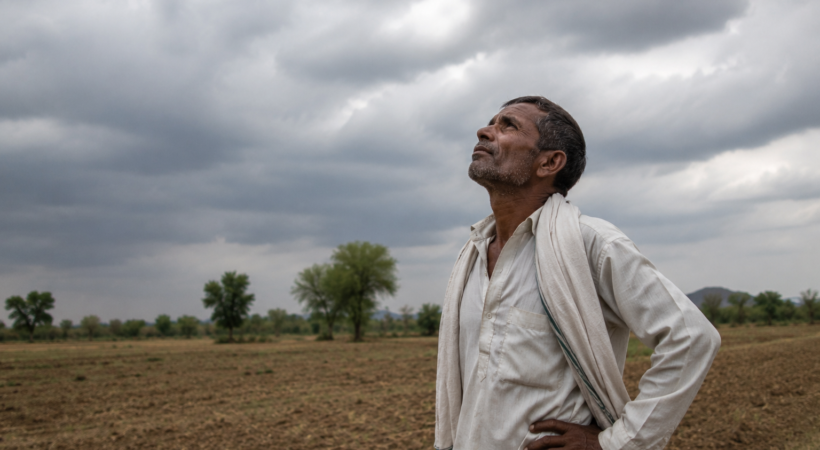
Being an agrarian economy, India is heavily dependent on the monsoon season. Every year, the country keenly awaits the arrival of the southwest monsoon, which first reaches the Kerala coast before gradually spreading across the rest of the country. As the season largely determines economic performance throughout the financial year, the India Meteorological Department’s (IMD) forecast of a below-normal monsoon has raised concerns.
The latest forecast released by the IMD indicates that India is likely to receive only 90 per cent of the Long Period Average (LPA) rainfall during the June-September monsoon season. The forecast was revised downward from an earlier estimate of 92 per cent, making 2026 potentially the weakest monsoon season since 2015 if the projection materialises.
Scientists attribute the expected rainfall deficit mainly to the development of El Niño conditions in the Pacific Ocean. Although the IMD has not predicted a nationwide drought, experts warn that below-normal rainfall could lead to water shortages in several regions and affect agricultural output.
A weaker monsoon could adversely affect the cultivation of kharif crops such as rice, pulses, millets and cotton, which are India’s major summer crops. With nearly half of the country’s farmland dependent on rainfall and a significant share of the workforce relying on agriculture, a decline in farm income could affect rural consumption and demand for products such as two-wheelers and tractors.
Analysts also warn that disruptions in fertiliser supplies and rising freight costs linked to geopolitical tensions in the Middle East could increase production costs for farmers and put pressure on agricultural profitability.
The IMD has also warned of severe heatwave conditions in June alongside below-normal rainfall. Such conditions could significantly affect public health, water availability and power consumption. Authorities have advised the elderly, children and outdoor workers to take extra precautions.
The Meteorological Department has urged state governments and district administrations to establish cooling shelters, ensure adequate drinking water supplies and strengthen health surveillance systems to manage the situation.
What is El Niño?
El Niño is a climate phenomenon characterised by unusually warm sea surface temperatures in the central and eastern Pacific Ocean. It typically results in increased rainfall over parts of the eastern Pacific and reduced rainfall in many western regions, including India.
El Niño is part of a larger climate system known as the El Niño-Southern Oscillation (ENSO), which has three phases: the neutral phase, El Niño (warming phase) and La Niña (cooling phase).
These changes occur in the Pacific Ocean, the largest ocean on Earth. Regions near the equator receive intense sunlight, resulting in high rates of evaporation. The trade winds that blow across this region play a crucial role in global weather patterns and monsoon systems.
Trade winds generally blow from east to west along the equatorial Pacific. Due to the Coriolis effect caused by Earth’s rotation, these winds blow from northeast to southwest in the Northern Hemisphere and from southeast to northwest in the Southern Hemisphere. They are known as trade winds because they were historically used by sailing ships.
Under normal conditions, trade winds push warm surface waters towards the western Pacific, near Australia and Southeast Asia. As a result, colder water rises to the surface in the eastern Pacific through a process known as upwelling.
When trade winds become stronger than normal, more warm water accumulates in the western Pacific, often leading to increased rainfall there. This condition is known as La Niña.
However, when trade winds weaken, upwelling decreases and warm water spreads eastward. Sea surface temperatures rise in the central and eastern Pacific Ocean, while the atmospheric circulation known as the Walker Circulation weakens. These changes alter global weather patterns and create El Niño conditions.
The term “El Niño”, which means “the boy” in Spanish, was coined by fishermen in South America because the warming typically appeared around Christmas and was associated with the Christ Child. The opposite phenomenon was later named “La Niña”, meaning “the girl”.
Despite concerns over El Niño, experts say there is no reason for panic. India’s monsoon is influenced by several factors, not El Niño alone. Modern weather forecasting systems have improved significantly, enabling authorities to prepare in advance and implement appropriate mitigation measures.
Experts therefore caution against overreacting to headlines about a “Super El Niño”, arguing that with proper planning, efficient water management and timely policy measures, the challenges can be effectively managed.